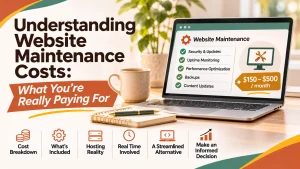

If you own a small business, you already have enough bills to keep up with. Your website should not be another mystery expense.
But how much does website maintenance cost each month? And more importantly, what should you get for your money?
The answer depends on the size of your website, the services you need, and who is taking care of it. Some businesses pay less than $100 a month. Others spend $500 or more.
Let’s look at what goes into website maintenance pricing and what small business owners should expect.
Average Website Maintenance Cost Per Month
Website maintenance costs can vary quite a bit. Here are some common price ranges for small businesses.
- $50 to $100 per month: Usually covers basic hosting, automatic backups, and limited support. You may still need to handle updates and website changes yourself.
- $100 to $250 per month: Often includes security updates, backups, software updates, uptime checks, and some help with website changes.
- $250 to $500 per month: May include more hands-on support, regular website improvements, performance checks, and additional development time.
- $500 or more per month: Often includes larger support plans, more frequent changes, advanced services, or dedicated agency resources.
These are general market ranges, not fixed industry prices. Always check what is included before signing up.
What Should Be Included in Website Maintenance?
Paying a monthly fee should mean more than having someone keep your website online.
A good website maintenance plan should cover several important tasks.
1. Website Updates
WordPress websites need regular updates to their core software, themes, and plugins.
These updates help fix bugs, improve security, and keep everything working together.
Skipping updates for months can leave your website open to security problems and software conflicts.
2. Regular Website Backups
Imagine spending years building your business website, only to lose it after a server problem or a bad update.
Backups give you a way to restore your website if something goes wrong.
Your maintenance provider should explain how often backups are made, where they are stored, and how quickly your website can be restored.
3. Website Security Monitoring
Hackers and automated bots do not care whether you run a small plumbing company in North Carolina or a large online store.
Every website can be a target.
Security monitoring, software updates, and basic protection help lower the risk of problems.
4. Website Speed and Performance Checks
A slow website can frustrate visitors and make it harder for people to contact your business.
Regular performance checks help catch problems before they become bigger headaches.
This can include checking image sizes, page loading issues, broken links, and other technical problems.
5. Website Changes and Updates
Your business changes over time. Your website should keep up.
You may need to:
- Change your phone number or business hours.
- Add a new service.
- Replace outdated photos.
- Update staff information.
- Add a new page.
- Fix a broken contact form.
Find out whether these changes are included in your monthly website maintenance cost or billed separately.
Why Cheap Website Maintenance Can Cost More Later
Saving money is always nice. But the cheapest website maintenance plan is not always the best deal.
A website that receives little attention may develop problems over time.
Outdated software, missing backups, broken forms, and security issues can turn into expensive repairs.
There is also the cost of missed business. If a customer tries to contact you and your website form does not work, you may never know that you lost the opportunity.
That is money you will not see on an invoice.
How to Choose the Right Website Maintenance Plan
Before paying for website maintenance services, ask a few questions:
- What updates are included?
- How often are backups performed?
- Is website security monitored?
- Are website edits included?
- Who do I contact when something breaks?
- Are there extra charges for routine work?
- How quickly can I expect a response?
A good provider should be able to answer these questions without giving you the runaround.
You should also know who is actually doing the work. Having direct access to the person managing your website can make a big difference.
What Should a Small Business Spend?
For many small service businesses, a plan in the $150 to $250 monthly range can provide a good balance of support and cost.
The right price depends on what your website needs and how much help you expect.
Do not pay for services you will never use. At the same time, do not leave your website unattended just to save a few dollars.
Keep Your Website Working for Your Business
Your website is often the first place a potential customer goes before calling your business. It needs regular attention, just like the rest of your operation.
At Livengood Websites, we help small businesses keep their websites updated, secure, and running properly. You get direct access to a real person who understands your website and can help when something needs attention.
Want to know what your website needs?
Contact Livengood Websites and let’s take a look.